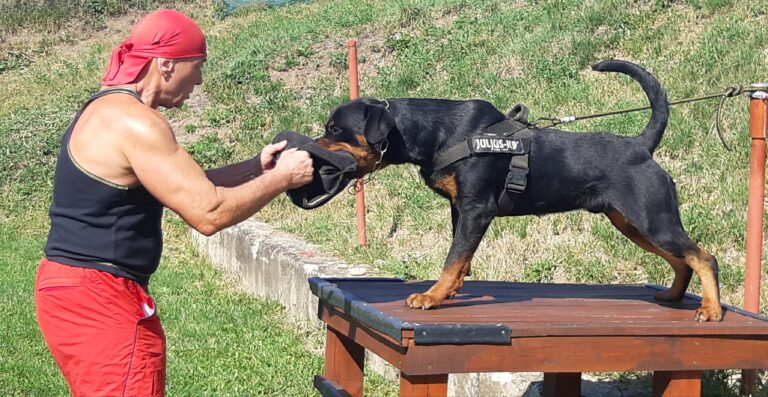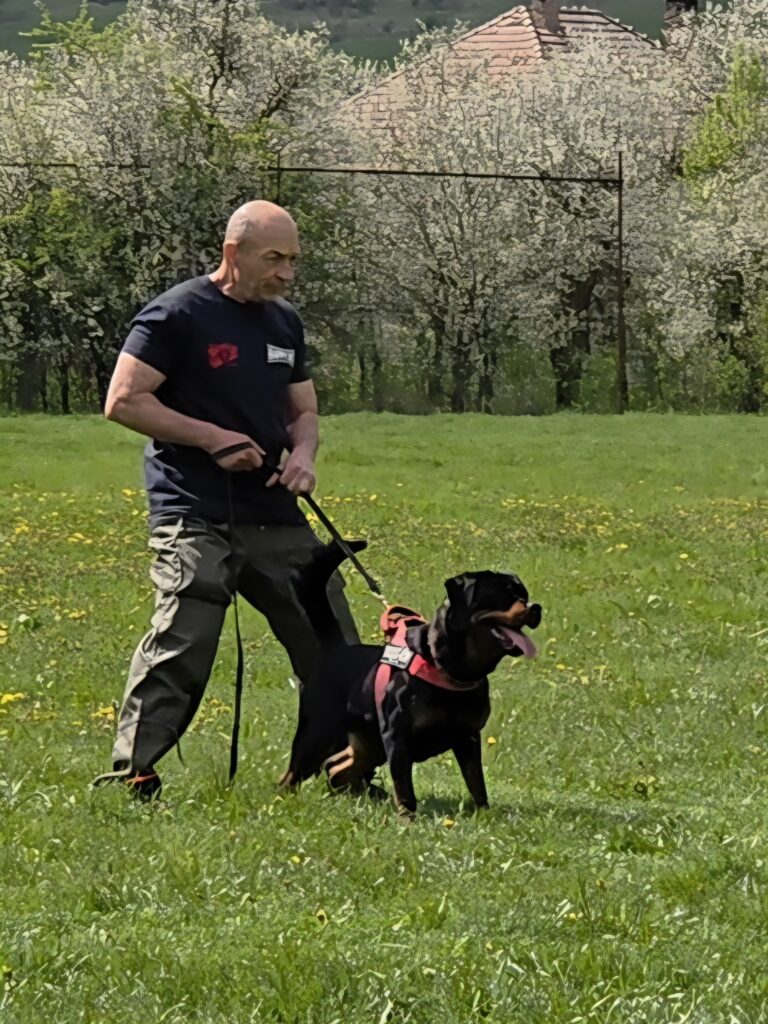
When people start researching protection dogs, two breeds almost always come up first: the Rottweiler and the German Shepherd. Both have long histories in working dog roles, both are widely used in protection and law enforcement, and both have loyal followings around the world.
So which one is actually better for personal and family protection? The honest answer is that both breeds can be exceptional – but they are different in ways that matter. This article breaks down those differences to help you make an informed decision.
A Brief History of Both Breeds in Protection Work
The German Shepherd was developed in Germany in the late 1800s specifically as a versatile working dog. From the very beginning, it was bred for intelligence, trainability, and physical endurance. German Shepherds became the standard choice for police and military work worldwide, and they remain the most widely used breed in law enforcement today.
The Rottweiler has even older roots. Originally used by Roman soldiers to drive and guard cattle, the breed later became essential to butchers in the German town of Rottweil – earning the nickname “butcher’s dog.” Rottweilers have served as guard dogs, police dogs, and personal protectors for centuries. Their natural guarding instinct is deeply embedded in the breed.
Both breeds were among the first to be formally trained and tested under the German IGP (Schutzhund) system, which remains the international standard for evaluating working dogs.
Temperament and Character
This is where the two breeds differ most significantly – and where your personal needs and lifestyle become the deciding factor.
German Shepherd
German Shepherds are highly active, alert, and eager to work. They tend to be in constant motion – scanning their environment, responding to stimuli, and looking for tasks to perform. This makes them outstanding in roles that require sustained activity, such as patrol work, search and rescue, or detection.
However, this high drive also means they require significant daily exercise and mental stimulation. A German Shepherd that does not get enough activity can become restless, anxious, or destructive. They are also more prone to reactivity – responding to environmental triggers that a calmer dog might ignore.
Rottweiler
Rottweilers are generally calmer, more composed, and less reactive in everyday situations. They have a natural confidence that does not require constant activity to maintain. A well-bred Rottweiler can lie quietly at your feet for hours and then respond instantly when a real threat appears.
This calm confidence makes the Rottweiler particularly well-suited for family protection. It does not overreact to normal household activity – guests arriving, children playing, doorbells ringing – but it remains aware and ready at all times. For many families, this balance of relaxation and readiness is exactly what they need.
Trainability
Both breeds are highly intelligent and trainable, but they learn and respond differently.
German Shepherds are often described as eager to please. They typically learn quickly and enjoy the process of training itself. This makes them very responsive in structured training environments, which is one reason they dominate police and military roles. However, their sensitivity means they can also shut down under harsh or inconsistent handling.
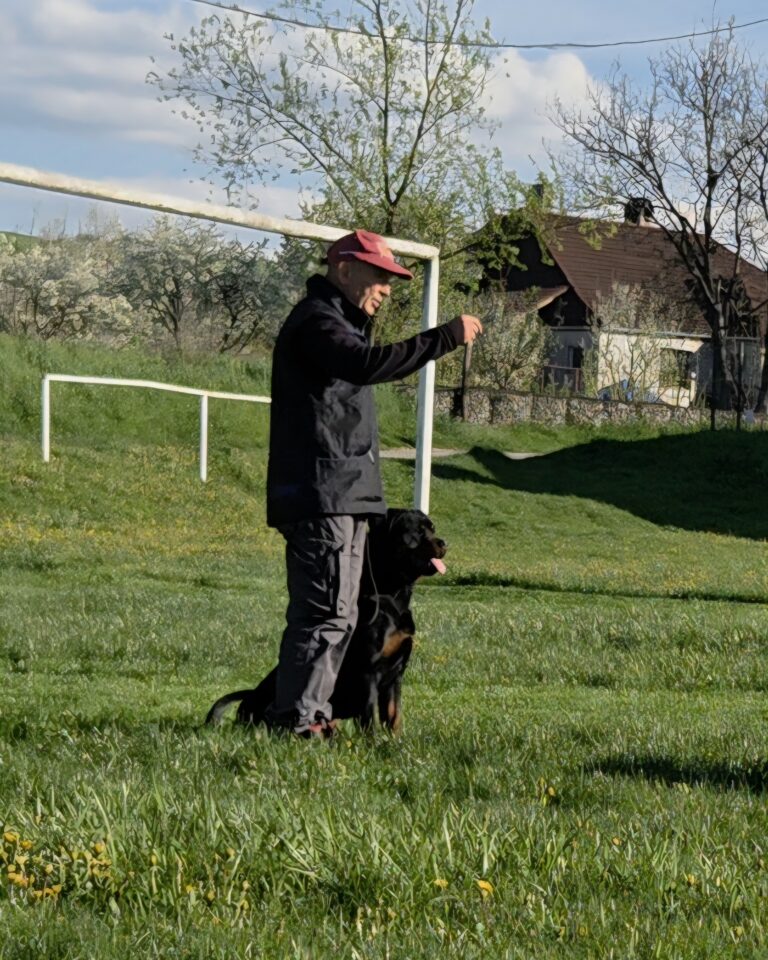
Rottweilers are equally intelligent but more independent in their thinking. They are willing to work, but they want to understand why. A Rottweiler will not blindly follow commands from someone it does not respect. This means training a Rottweiler requires consistency, patience, and a clear leadership approach. Once that relationship is established, a Rottweiler’s loyalty and obedience are rock solid.
In practical terms: a German Shepherd may learn a new command faster, but a Rottweiler’s trained behavior tends to be more deeply rooted and reliable under pressure.
Physical Presence and Deterrent Effect
In protection work, the goal is often to prevent a confrontation rather than engage in one. This is where physical presence matters.
A German Shepherd is athletic and agile, typically weighing 30–40 kg. Its alert posture and focused gaze can be intimidating, especially when it is clearly trained. However, German Shepherds are also a very common breed, and many people associate them with friendly family pets rather than protection.
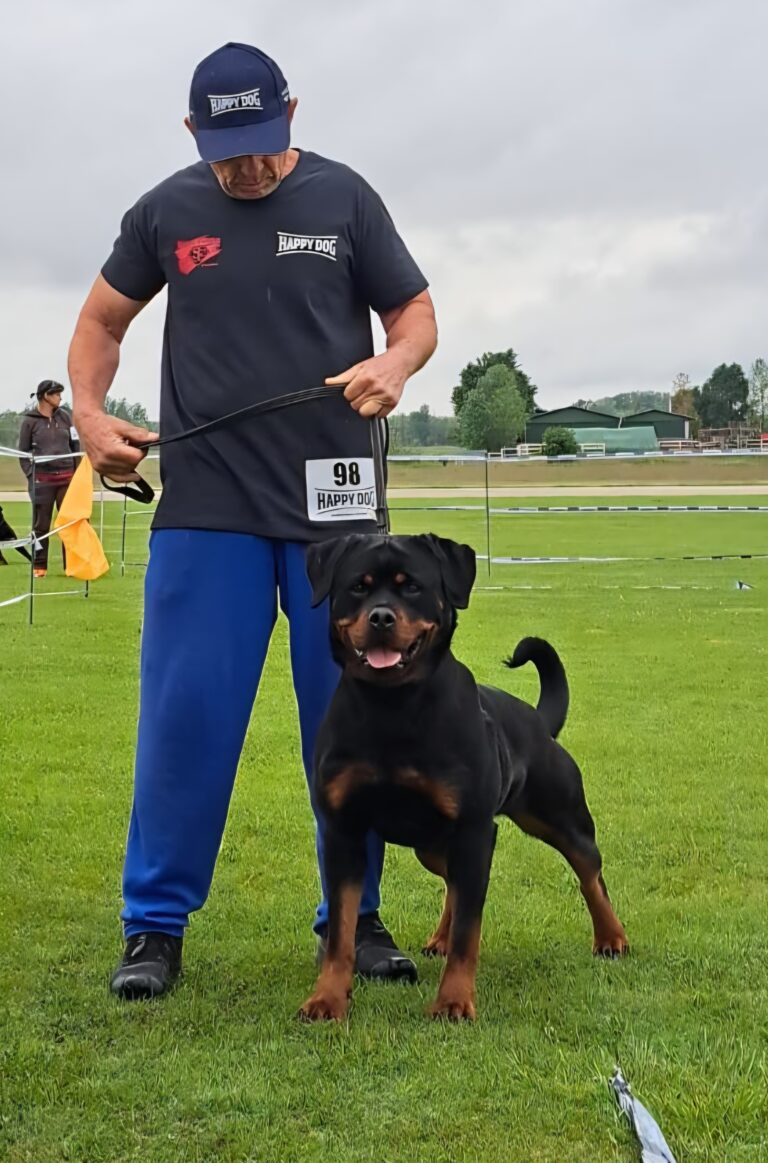
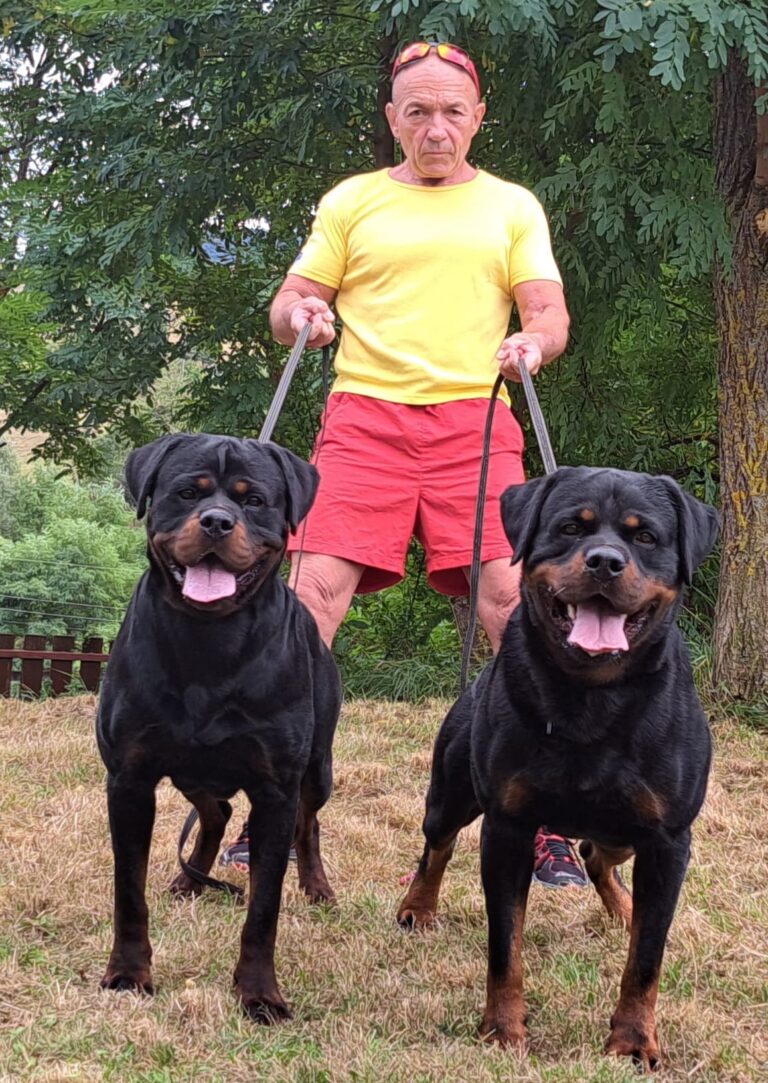
A Rottweiler typically weighs 40–60 kg, with a broad chest, powerful build, and a deep, commanding presence. The Rottweiler’s appearance alone is often enough to deter a potential threat. People who encounter a focused, confident Rottweiler rarely choose to test its boundaries. This natural deterrent effect is one of the breed’s greatest advantages in personal protection.
Family Compatibility
Both breeds can be excellent family dogs when properly trained and socialized. However, there are differences worth considering.
German Shepherds tend to bond strongly with one primary handler. While they can be good with all family members, they often show a clear preference and work best with that one person. They can be reserved or cautious around strangers, which is useful for protection but requires careful socialization.
Rottweilers are known for bonding with the entire family. They are often described as gentle giants at home – affectionate, patient, and surprisingly playful. Many Rottweiler owners are struck by the contrast between their dog’s imposing appearance and its tender behavior with family members, especially children. This whole-family bonding makes the Rottweiler an ideal choice for households where the dog needs to integrate with multiple people.
Health and Longevity
Health is an important practical consideration when investing in a protection dog.
German Shepherds are unfortunately prone to several genetic health issues, particularly hip and elbow dysplasia, degenerative myelopathy, and spinal problems. The breed’s exaggerated sloped back in some show lines has contributed to structural weaknesses. Working-line German Shepherds tend to be healthier, but the breed still carries a higher overall health risk. Average lifespan is typically 9–13 years.
Rottweilers can also be affected by hip and elbow dysplasia, and some lines are prone to certain heart conditions. However, well-bred Rottweilers from health-tested working lines tend to be structurally sound and robust. The breed is powerful and athletic when properly maintained. Average lifespan is typically 8–10 years, though many healthy Rottweilers live longer with proper care.
For both breeds, choosing a responsible breeder who performs health testing and breeds from proven working lines is the single most important factor in getting a healthy dog.
Maintenance and Daily Life
German Shepherds shed heavily – year-round, with even heavier seasonal shedding periods. They require regular grooming to manage their thick double coat. They also need significant daily exercise – typically 1.5 to 2 hours of activity including walks, training, and play.
Rottweilers have a shorter, lower-maintenance coat that sheds moderately. Grooming needs are minimal compared to German Shepherds. Exercise needs are moderate to high – they need daily activity and training, but they are generally less demanding than German Shepherds and more content to relax between activities.
Which Is Better for You?
There is no universal “better” breed – only the better choice for your specific situation. Here is a simple guide:
A German Shepherd may be better if: you want a highly active working partner, you have experience handling high-drive dogs, you need a dog for a specific working role like patrol or detection, or you are the sole handler and want a dog that bonds primarily with you.
A Rottweiler may be better if: you want a calm, confident family protector, you need a dog that integrates well with your entire household including children, you value physical presence and natural deterrent, you want a dog that is composed in daily life but decisive when needed, or you prefer a lower-maintenance companion.
Our Perspective at Working Rottweilers
We respect the German Shepherd as an outstanding working breed. Many of the principles we apply in our training – structure, consistency, progressive difficulty – come from the same German working dog tradition that shaped both breeds.
However, we chose to focus on the Rottweiler because we believe it offers the best combination of qualities for personal and family protection: natural guarding instinct, calm confidence, physical power, deep family loyalty, and the ability to switch between a relaxed companion and a decisive protector.
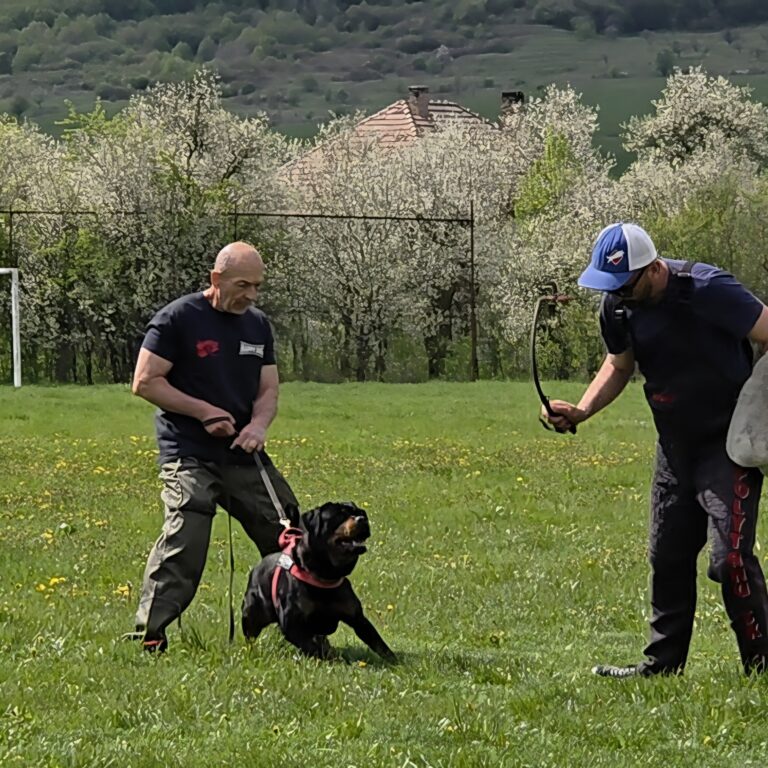
Every dog we prepare is selected from proven working bloodlines, trained through the IGP system, and evaluated for temperament, health, and real-world reliability. We do not just train dogs – we build working partnerships between dogs and their future families.
If you are considering a protection dog and want to understand which option is right for you, we are happy to have that conversation. Explore our available dogs or contact us to learn more about what we do and how we can help.