You have done the research. You have found a reputable breeder. You have brought home a trained protection Rottweiler with real titles, proven temperament, and years of structured work behind it. Now comes the part most buyers underestimate: keeping that training alive.
A protection dog’s skills are not permanent. They are perishable. Without consistent reinforcement, even the best-trained dog will lose sharpness, reliability, and the connection with its handler that makes protection work effective. This guide explains exactly what you need to do — and what to avoid — to maintain your dog’s training at home.
Why Training Maintenance Matters
Professional protection dog training takes months or years to build. It is layered, progressive, and rooted in repetition. The dog learns to associate specific commands with specific responses, and those associations are reinforced hundreds of times before the dog is placed.
When the dog moves to a new home, everything changes. The environment is different. The handler is different. The daily routine is different. If the new owner does not actively maintain the training, the dog begins to adapt to its new reality — and that reality may not include the structure it was trained in.
This does not mean the dog forgets everything overnight. But over weeks and months, without reinforcement, the dog’s responses become slower, less precise, and less reliable. Commands that were once instant may require repetition. Behaviors that were once sharp may become casual. The dog is not broken — it simply has not been reminded what is expected.
Daily Obedience Practice
This is the foundation of everything. Ten to fifteen minutes of structured obedience work every day is more effective than one long session per week. The goal is not to exhaust the dog — it is to maintain the communication channel between you and the dog.
Focus on the core commands your dog was trained with. For most IGP-trained dogs, these include:
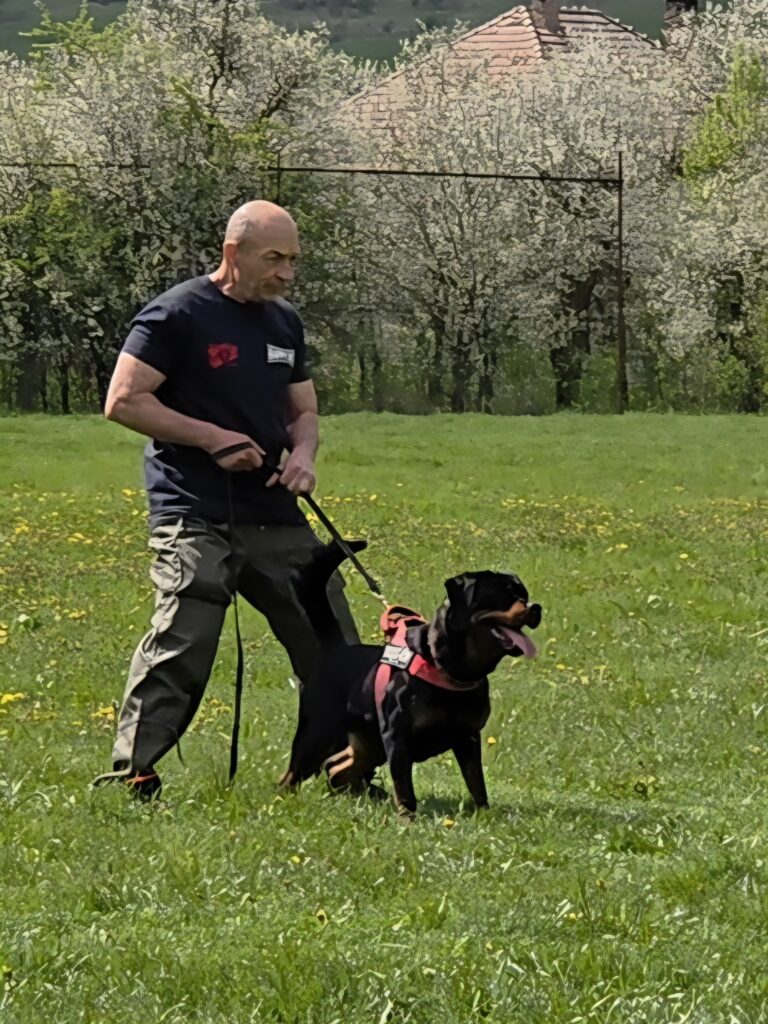
Heel (Fuss). Walk with the dog in a controlled heel position — left side, shoulder aligned with your leg, no pulling, no drifting. Practice changes of pace and direction. This exercise reinforces your leadership and the dog’s focus on you.
Sit and Down (Sitz / Platz). Practice these in different locations and under different levels of distraction. The dog should respond on the first command, quickly and without hesitation. If it does not, you are not practicing enough.
Stay (Bleib). Place the dog in a sit or down, then walk away. Increase the distance and duration gradually. The dog should remain in position until you return or release it. This builds impulse control and trust.
Recall (Hier / Come). Call the dog from a distance. It should come directly to you, quickly, and sit in front of or beside you. A reliable recall is not optional — it is a safety requirement for any protection dog.
Out / Release (Aus). If your dog has been trained in bite work, the out command must remain sharp. Practice it with toys or tug items. The dog must release immediately on command, every time, without exception.
Maintain Structure in Daily Life
Training is not just what happens during practice sessions. It is how you live with the dog every day. A protection dog thrives on structure, consistency, and clear expectations.
Feeding routine. Feed at the same times each day. Make the dog sit and wait before eating. This is a simple exercise that reinforces impulse control and respect for your leadership — twice a day, every day.
Door manners. The dog should wait at every door until you give permission to pass. Never let a protection dog charge through doorways ahead of you. This is not about dominance theory — it is about control and safety.
Boundaries in the home. Decide where the dog is allowed and where it is not. Be consistent. If the couch is off limits today, it is off limits tomorrow. Inconsistency creates confusion, and confusion erodes training.
Calm behavior around guests. When visitors arrive, the dog should go to its place and remain there until released. This is a trained behavior that must be practiced regularly. A protection dog that cannot settle in the presence of guests is a liability, not an asset.
Physical Exercise and Mental Stimulation
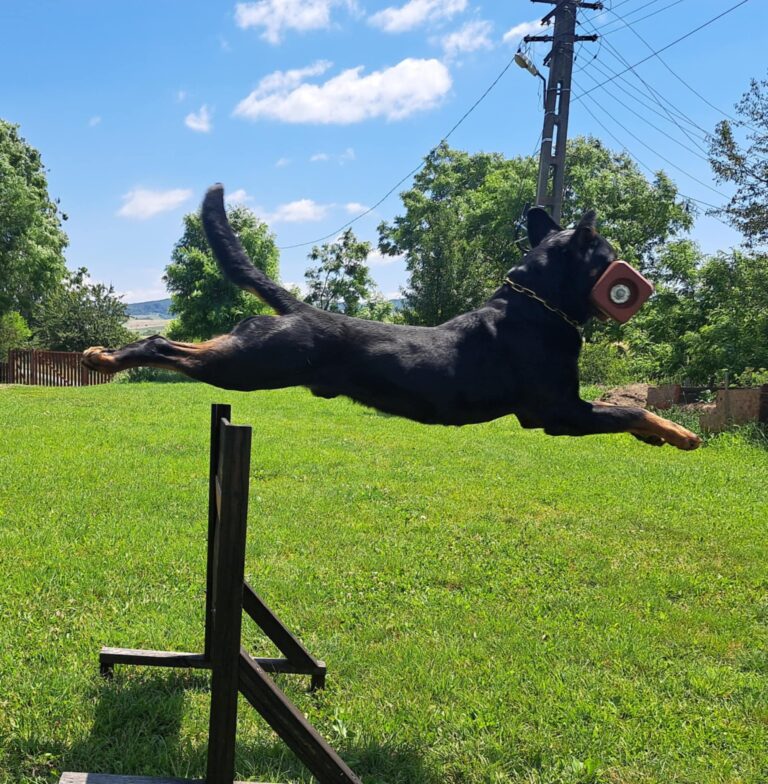
A protection dog is a working animal. It was bred and trained to perform tasks that require physical strength, endurance, and mental focus. If it spends its days lying on the floor with no outlet, it will deteriorate — physically, mentally, and behaviorally.
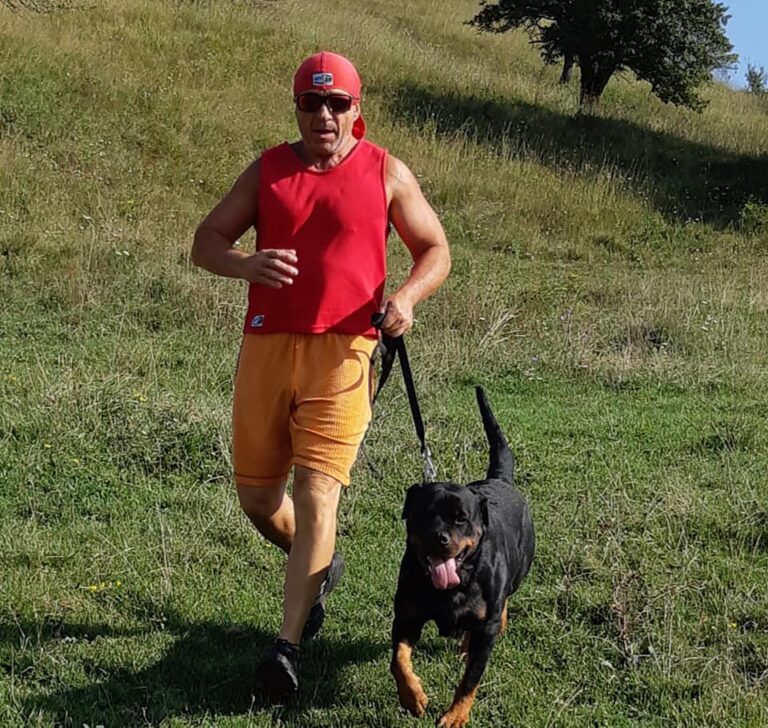
Daily exercise should include at minimum a structured walk of 30–60 minutes. This is not casual strolling — it is a focused walk where the dog heels, follows commands, and engages with you. Add free play, fetch, or tug sessions for physical release.
Mental stimulation is equally important. Practice obedience in new environments. Introduce search exercises — hide a toy or treat and let the dog find it using its nose. Teach new commands or tricks. A mentally engaged dog is a stable dog.
Tracking work is excellent for trained dogs and can be practiced in any open field. Lay a simple track with food or an object at the end and let the dog work it. This taps into the dog’s natural drives and reinforces the focus and patience built during IGP training.
Protection Work — Handle with Care
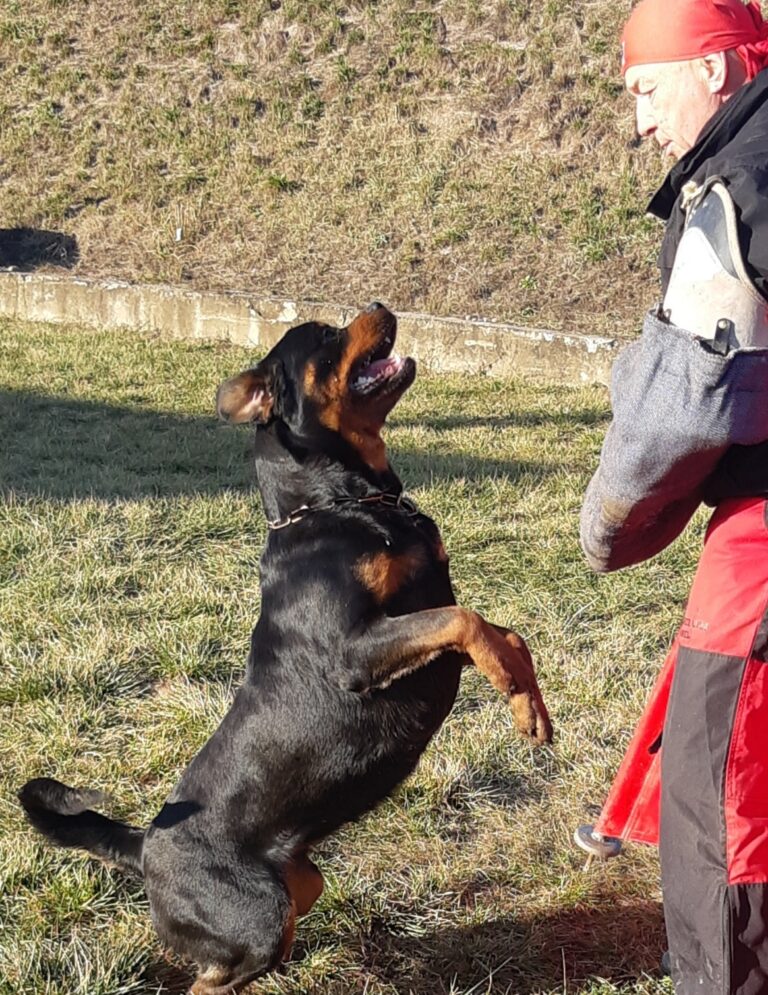
This is the area where most new owners make mistakes. Protection work is specialized and requires proper equipment, experienced helpers, and controlled scenarios. Do not attempt protection training on your own if you are not experienced.
Here is what you should and should not do:
Do: Find a local IPO/IGP club or experienced protection dog trainer and attend regular sessions — ideally once or twice per month. This keeps the dog’s protection skills sharp under professional supervision.
Do: Practice obedience elements that support protection work — focus exercises, impulse control, hold and bark positioning, and the out command with toys.
Do not: Encourage the dog to bite or show aggression outside of structured training. Do not tease the dog, have friends pretend to attack you, or test the dog’s reactions in uncontrolled situations. This creates confusion and can lead to dangerous behavior.
Do not: Skip the out command. If the dog learns it can hold on longer than commanded, or that the out is negotiable, you are creating a serious problem. The out must be immediate, consistent, and non-negotiable — in every context.
Common Mistakes New Owners Make
Even experienced dog people make mistakes when transitioning a trained protection dog into their home. Here are the most common:
Stopping training because the dog seems fine. A well-trained dog that behaves perfectly at home may seem like it does not need practice. It does. What you see as good behavior is the result of thousands of repetitions. Without maintenance, it will gradually fade.
Changing commands. If the dog was trained in German (Sitz, Platz, Fuss, Hier), keep using those commands. Do not switch to English or your native language unless you retrain each command systematically. Mixing languages creates confusion.
Being inconsistent with rules. The biggest threat to a trained dog is an inconsistent handler. If you enforce rules sometimes but not others, the dog learns that commands are suggestions, not requirements.
Over-correcting or under-correcting. Follow the trainer’s guidance on how to correct the dog. Too much correction creates stress and avoidance. Too little creates a dog that ignores you. Balance is everything.
Treating the dog like a pet instead of a working partner. A protection dog can absolutely be a loving family member. But it still needs structure, leadership, and regular work. The two are not mutually exclusive — they are complementary.
Stay Connected with Your Breeder or Trainer
A responsible breeder or trainer does not disappear after the sale. They are a resource — and you should use them. At Working Rottweilers, we stay in contact with every owner who takes one of our dogs. We offer guidance on training maintenance, answer questions as they come up, and help troubleshoot problems before they become serious.
If something changes in your life — a move, a new family member, a change in routine — talk to your trainer. They can help you adjust the dog’s structure to fit the new situation without losing what was built.
The Bottom Line
A trained protection dog is one of the most valuable investments you can make in your family’s safety. But like any investment, it requires ongoing attention. The training your dog received is a foundation — not a finished product. What you build on that foundation determines whether your dog remains a reliable, controlled, confident protector or gradually becomes just another pet.
Fifteen minutes a day. Consistent rules. Regular professional check-ins. That is all it takes to maintain what years of training built.
If you are considering a trained protection Rottweiler or have questions about maintaining your dog’s training, explore our available dogs or contact us. We are here to help — before, during, and after the placement.