A dog that listens in the yard but falls apart under pressure is not trained well enough for real life. That is where professional dog training services matter. For families, property owners, and security-minded handlers, the goal is not a dog that performs for applause. The goal is a dog that stays clear-headed, obedient, and controllable when the stakes are higher.
That difference is especially important in large, powerful working breeds. Strength without structure creates liability. Drive without control creates risk. Good training does not simply teach commands. It builds a dog that can live in a home, move through public spaces, and respond reliably to its handler without confusion, avoidance, or unnecessary aggression.
What professional dog training services should actually deliver
A serious training program should produce measurable control. That starts with obedience, but it does not stop there. Sit, down, heel, place, recall, and leash manners are the foundation. The real value comes from how those behaviors hold up around distraction, pressure, unfamiliar environments, and changing routines.
Professional dog training services should also address temperament and handler communication. A stable dog is not just obedient in a quiet setting. It can settle when asked, engage when needed, and recover quickly after stimulation. That steadiness matters more than flashy behavior because real-world ownership is full of imperfect moments.
For protection-oriented homes, the standard is even higher. A dog should never be trained to create chaos. It should be trained for clarity. That means clean obedience, disciplined thresholds, environmental confidence, and the ability to distinguish between normal daily life and a true threat. Without that structure, what looks impressive in a training field can become unsafe in a driveway, front door entry, or family setting.
Not all training services are built for the same outcome
This is where many owners make the wrong comparison. They look at any trainer, any board-and-train package, or any obedience class as if the outcomes are interchangeable. They are not. A trainer focused on pet manners may be perfectly capable within that lane, but that is different from developing a dog for advanced control, working reliability, or personal protection readiness.
The right service depends on the dog, the owner, and the job the dog is expected to do. A young family dog with poor boundaries may need clear obedience and household structure. A property owner may need a dog with stronger environmental confidence and better neutrality around visitors until directed otherwise. A client seeking a true protection dog needs a much more specialized process built on genetics, nerve strength, impulse control, and experienced handling.
That is why broad promises should raise concern. Serious trainers assess the dog in front of them. They consider age, drives, social behavior, thresholds, confidence, recovery, and the owner’s level of experience. If a provider talks only about speed or intensity and says little about control, stability, and suitability, that is a warning sign.
The role of genetics in training outcomes
Training matters, but training cannot erase poor genetics. This is one of the most misunderstood parts of the industry. A dog with weak nerves, unstable temperament, poor environmental confidence, or unreliable recovery will always have limits, no matter how much work is put into the program.
That matters most when people want a dog that offers both companionship and security. You cannot force true working reliability into a dog that was never bred for it. You can improve behavior. You can sharpen obedience. But when the expectation includes family integration, public control, and defensive capability, the starting material has to be right.
This is why experienced working-dog programs place so much emphasis on breeding standards and evaluation. Stable temperament is not an extra feature. It is the base requirement. The strongest training results come when a capable dog is developed by trainers who understand both behavior and working purpose.
What to look for in professional dog training services
The first thing to look for is clarity. A quality provider should be able to explain exactly what the training includes, what standard the dog is expected to reach, and what the owner must do to maintain that standard. Vague language usually hides weak process.
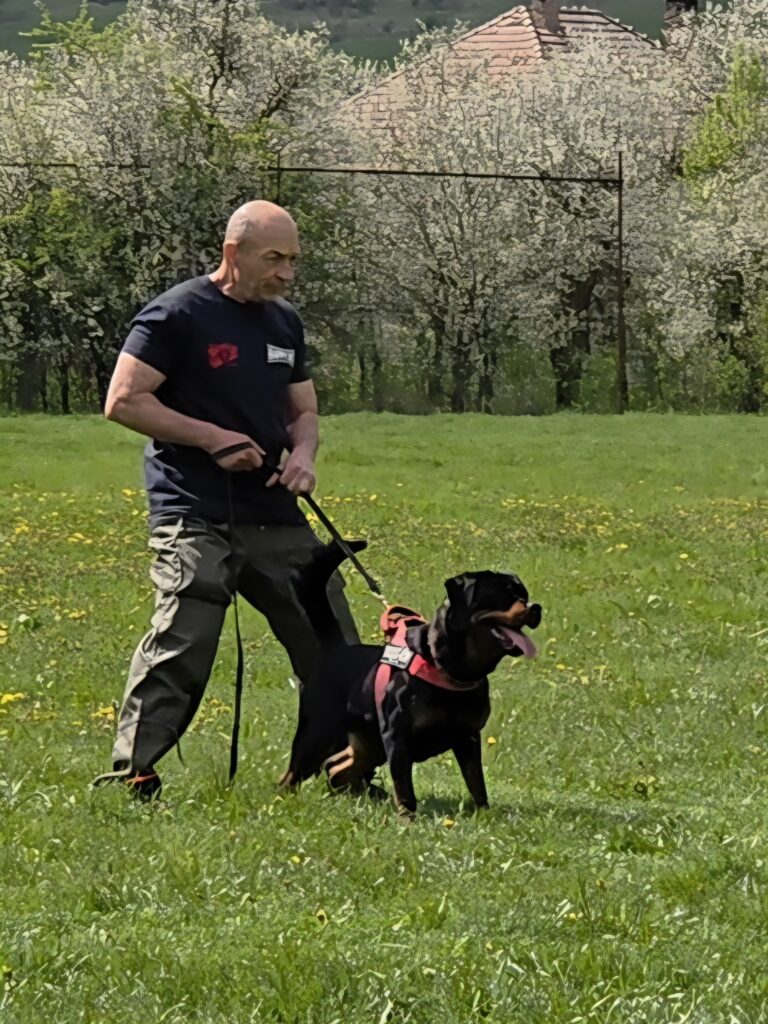
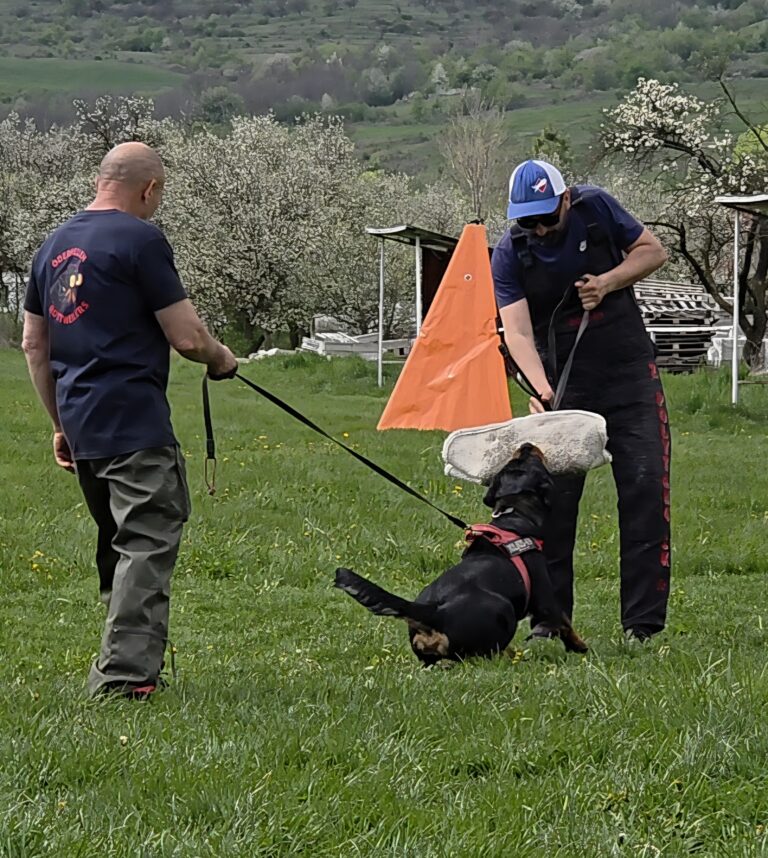
The second is proof of control, not just intensity. Videos and demonstrations can be useful, but only if they show more than barking, sleeve work, or high drive. Watch for clean obedience, calm transitions, handler responsiveness, and composure around distractions. A serious dog should look manageable, not chaotic.
The third is owner integration. Even the best-trained dog can decline if the handler is not taught how to lead it properly. Training should not end with the dog. It should include transfer work so the owner can apply commands, maintain standards, and understand the dog’s thresholds and responsibilities.
Finally, look at the trainer’s philosophy. Balanced, ethical training focused on structure and accountability tends to produce clearer, more dependable results than methods built on fear or on permissiveness. For working dogs, fairness and consistency matter. So does experience under real demands, not just classroom theory.
Why owner training still matters
Some buyers assume that if they invest in a trained dog, they can skip their part. That is not realistic. Professional dog training services can establish the dog’s skills, but the owner is the one who lives with the dog every day. If household rules shift constantly, commands are ignored, or the dog receives mixed signals, reliability drops.
That does not mean every owner must become a professional handler. It means they must become a clear, consistent leader. Good programs prepare owners for that role. They teach timing, leash handling, command structure, reward use, correction standards, and situational judgment.
For protection dogs, this is non-negotiable. The dog must understand the handler, and the handler must understand the dog. Control is not based on hope. It is built on repetition, structure, and accountability from both sides of the leash.
Professional dog training services for protection-minded owners
When security is part of the goal, the standard changes. The dog must still function as a companion, but it also has to remain responsive under challenge. That requires more than advanced obedience. It requires a training approach that develops confidence, discrimination, engagement, and clear off-switch behavior.
A reliable protection dog is not constantly on edge. It does not posture at every sound or treat every stranger like a threat. It lives with discipline. It is social when appropriate, neutral when expected, and serious only when the situation truly demands it. That balance is what separates a dependable protection dog from an unstable liability.
For that reason, the best providers build training around real-life usability. The dog should load into a vehicle, settle in the house, move through routine environments, and remain under command around family members and invited guests. If those basics are missing, advanced claims mean very little.
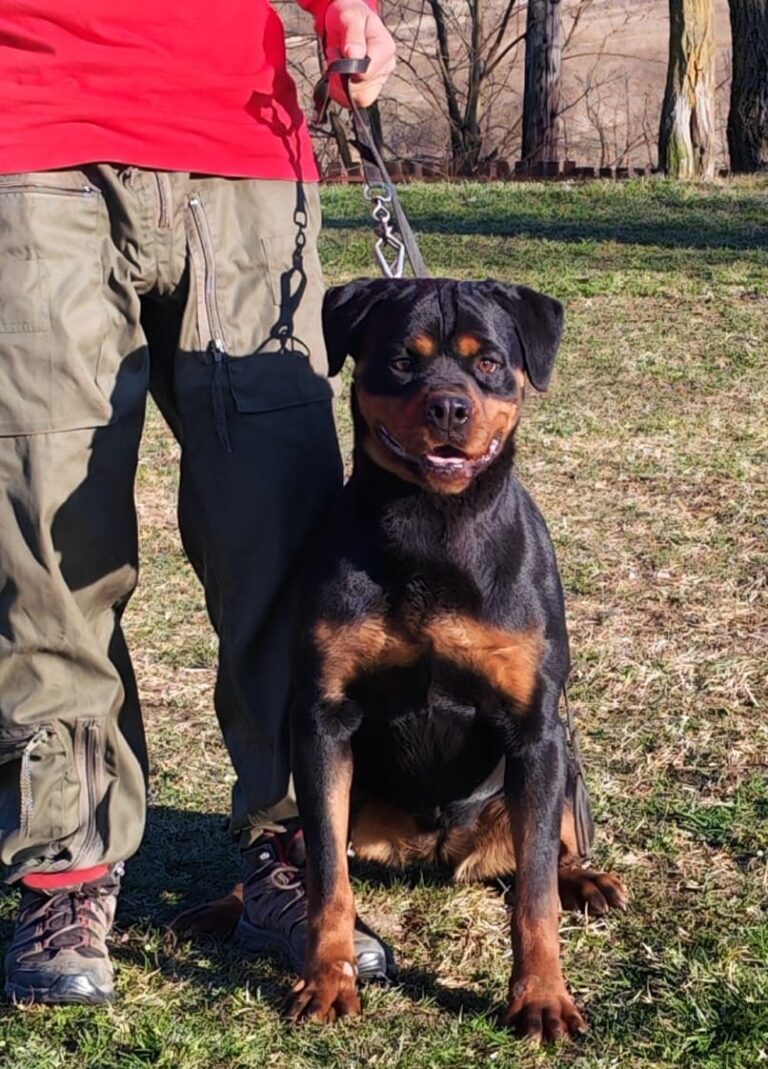
At Working Rottweilers, that standard is central to the work. Training is tied to stable temperament, practical obedience, and real-world control rather than image or theatrics. That is the right priority when owners are trusting a dog with both their safety and daily life.
The cost question and what buyers are really paying for
Professional training can be expensive, especially when the dog is expected to perform at a high level. Some buyers hesitate at the price without considering the alternative. Poor training costs money too. So does inconsistent behavior, liability, damaged property, failed placements, or having to start over with a different trainer.
When you pay for a serious training program, you are paying for time, evaluation, repetition, handling skill, and standards that hold under pressure. In higher-level working programs, you are also paying for select genetics, structured development, and a dog that has been prepared with a specific purpose in mind.
That does not mean the most expensive option is always the right one. It means value should be measured by outcome. A cheaper program that leaves you with partial obedience and no transfer support is often more costly in the long run than a disciplined program that produces a reliable, manageable dog.
Choosing the right path for your dog and your home
The best training decision starts with honesty. What do you actually need from the dog? What can your household manage? What level of experience do you have, and what level of support will you need after training is complete?
For some owners, strong obedience and better structure will solve the problem. For others, especially those with serious security concerns, only specialized professional dog training services will meet the standard. There is no benefit in pretending those needs are the same.
A well-trained dog should give you confidence, not extra uncertainty. It should add order to your home, not tension. When the training is done correctly, you do not just get better behavior. You get a dog you can trust when routine days stay routine and when they do not.
4 Comments