A protection dog should never leave you guessing. If you are searching for trained protection dogs for sale, the real question is not who has dogs available. The real question is which dogs are trained, tested, and developed to protect with control, live safely with family, and perform reliably under pressure.
That distinction matters because the market is crowded with dogs marketed as protection animals that are little more than expensive pets with bite work. Serious buyers need more than presentation. They need stability, obedience, environmental confidence, and a dog that can shift from calm family companion to active deterrent without confusion or chaos.
What trained protection dogs for sale should actually offer
A properly trained protection dog is not simply a hard dog. Hardness without control is a liability. The standard should be clear: strong nerves, clean obedience, dependable social behavior, and the ability to respond to threat with precision instead of panic.
For family security, that means the dog can live in the house, travel in public, remain neutral around ordinary people, and follow direction even when stress rises. For estate or property protection, it means the dog has enough presence to deter problems before they escalate, while still remaining manageable by the owner. In both cases, the dog must be trained for real-life usability, not just field presentation.
This is where many buyers make an expensive mistake. They focus on size, color, intensity, or social media footage. Those factors do not tell you whether a dog is safe to own. Real value comes from character, structure in training, and proven control.
The difference between a protection dog and a dangerous dog
A trained protection dog should increase security, not create new risk inside your home. That is why temperament is not a side issue. It is the foundation.
The right dog has a stable threshold. It does not overreact to normal visitors, children moving quickly, household noise, or routine handling. It does not need to prove itself every day. It is clear-headed, trainable, and confident enough to wait for direction.
A dangerous dog often shows the opposite pattern. It is hectic, suspicious without reason, difficult to redirect, and inconsistent in obedience. Some dogs look impressive in short demonstrations but lack the mental balance for daily life. That may produce a dramatic video. It does not produce peace of mind.
Serious providers build dogs that can do both jobs at once: protect when necessary and settle when not. That balance is what separates professional preparation from sales hype.
Why breed selection matters in trained protection dogs for sale
Not every breed is suited for this work, and not every bloodline within a working breed produces the same result. Buyers looking at trained protection dogs for sale should pay close attention to lineage, nerve strength, recoverability, and working temperament.
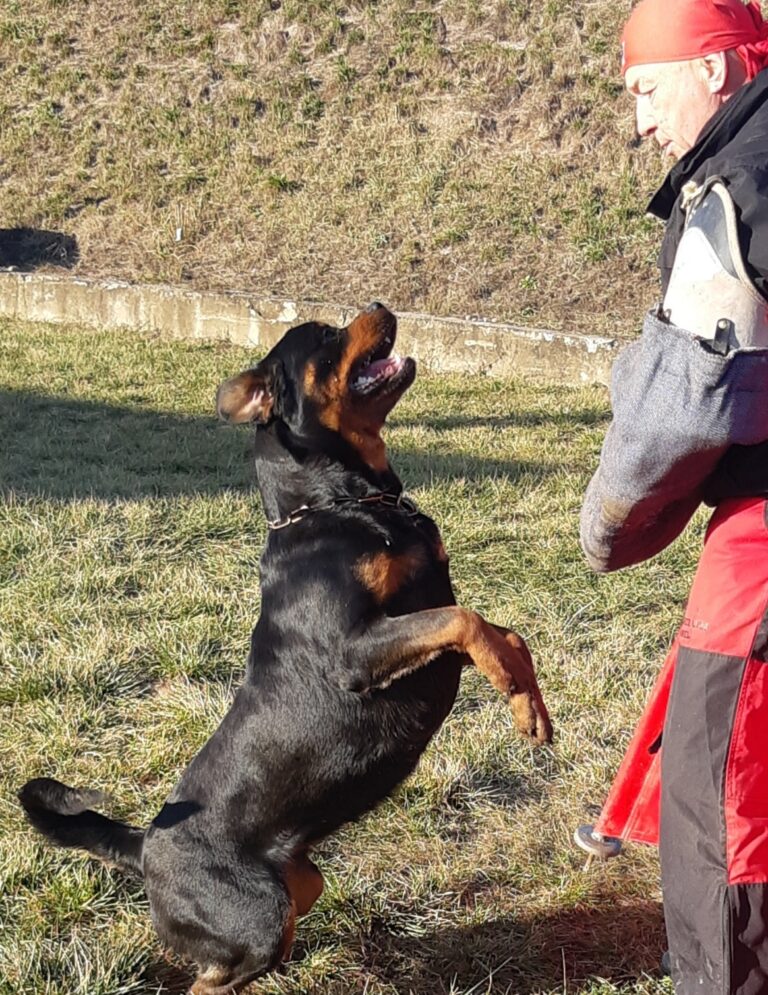
A well-bred Rottweiler stands apart because the breed combines natural power with steadiness, clarity, and civil presence. When bred and trained correctly, a working Rottweiler does not need frantic energy to be effective. It brings substance, composure, and serious deterrent value. That makes it especially well suited for families and property owners who want real security without constant volatility.
Of course, breeding alone is not enough. A strong genetic foundation only creates potential. That potential still has to be developed through structured obedience, controlled protection work, environmental exposure, and careful testing over time.
What to look for before you buy
A credible protection dog program should be able to explain exactly how the dog was developed. Vague promises are not enough. You should know how the dog handles pressure, what level of obedience it has, how it behaves around neutral strangers, and what kind of home it fits.
Ask whether the dog has been raised and trained for household integration or only for kennel and field routines. Those are not the same thing. A dog that performs well in a controlled training setting may still struggle in airports, parking lots, family gatherings, or the unpredictable rhythm of a normal home.
You should also ask how the dog transitions to a new owner. Even a highly trained dog needs a proper handoff. Transfer training matters because the dog must learn your commands, your expectations, and your daily environment. Without that process, even a good dog can underperform.
The best sellers are not trying to move inventory. They are matching the right dog to the right handler, family, or property.
Obedience should come before protection
Protection training gets attention, but obedience is what makes protection usable. A dog should out, recall, down under distraction, heel cleanly, and remain neutral until given a reason to act. If those basics are weak, protection work is not an asset. It is exposure.
This is especially important for homes with children, regular visitors, staff, or multiple daily variables. A dog with strong obedience creates confidence because the owner can direct behavior clearly. That level of control is not optional in a finished protection dog.
Environmental stability is non-negotiable
A dog may look powerful on familiar ground and still fall apart in real life. Stability has to travel. That means the dog can function on slick floors, in parking garages, near traffic, around noise, and through changing environments without becoming hectic or avoidant.
For buyers in the USA, this matters even more because lifestyle demands vary. Some dogs will live in suburban homes, others on rural properties, and others with owners who travel frequently. A legitimate protection dog program should prepare the dog for life beyond one training field.
Why cheap protection dogs usually become expensive problems
Price matters, but value matters more. A low-cost dog that lacks proper development often requires retraining, management, or replacement. Worse, if the dog is unstable, the cost may show up in liability and safety concerns rather than in training bills.
A fully trained protection dog reflects time, selection standards, professional handling, and extensive proofing. That includes breeding decisions, puppy development, obedience work, bite development, environmental conditioning, health investment, and owner transfer. Serious work takes time because shortcuts show up later.
That does not mean the highest price is automatically the best choice. It means buyers should understand what they are paying for. A finished dog is not valuable because it is rare. It is valuable because the risk of uncertainty has been reduced through proper development.
The role of ethics in a serious protection dog program
Protection work should be rooted in responsibility. Ethical breeding and training are not marketing extras. They directly affect the quality of the dog you bring home.
Programs built on working standards select for nerve, health, structure, and temperament instead of chasing oversized heads, exaggerated looks, or trend-driven breeding. They train for control, not chaos. They also tell buyers the truth about fit. Not every dog belongs in every home, and not every buyer should own the most intense dog available.
That honesty is part of the service. A provider who pushes the wrong dog for the sake of a sale is creating problems for everyone involved.
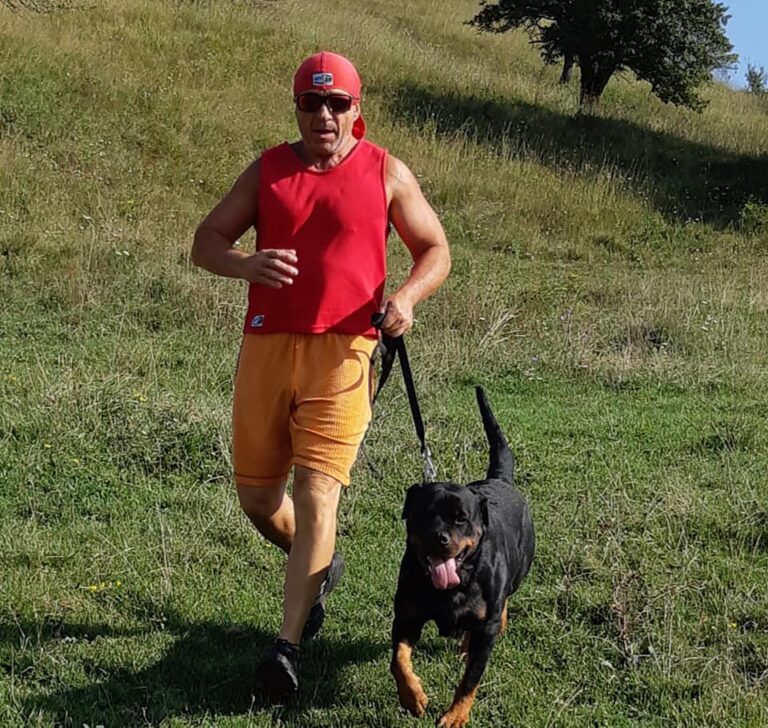
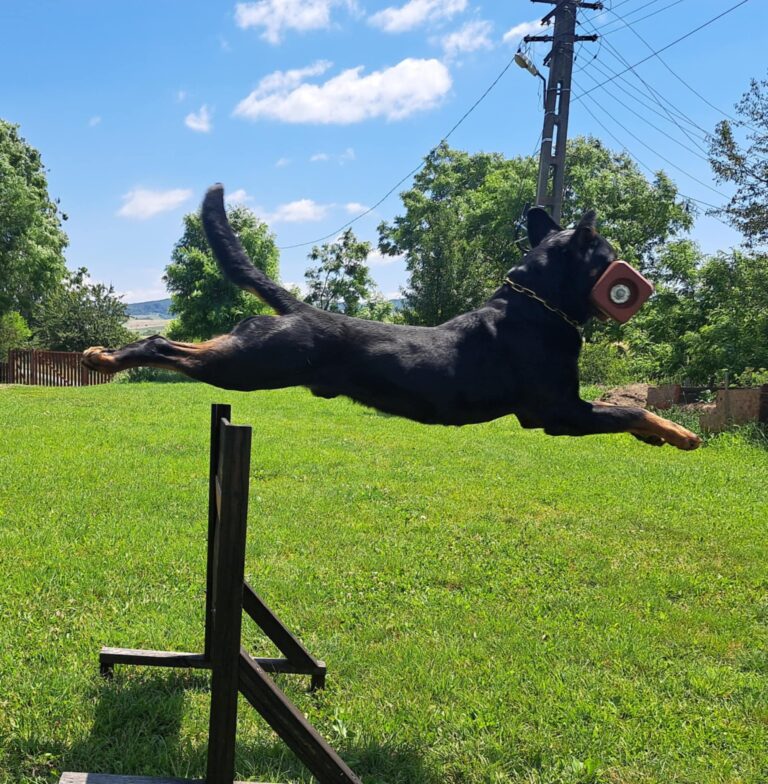
Working Rottweilers reflects the standard serious buyers should expect: dogs bred and trained for function, stability, and owner safety rather than appearance alone.
Who should buy a trained protection dog
A trained protection dog is a strong fit for buyers who take security seriously and are willing to follow structure. That includes families who want a dependable deterrent, property owners who need visible protection, and professionals who want more than an alarm system can provide.
It is not the right choice for someone looking for status, impulsive excitement, or a shortcut around responsible ownership. Even a fully trained dog still requires leadership, routine, and maintenance. The advantage is that a properly prepared dog gives the owner a far stronger starting point than trying to build protection capability from scratch.
The best outcomes happen when expectations are realistic. A trained dog can add security, confidence, and daily companionship. It is not a gadget and not a decoration. It is a living working partner.
How to judge the seller, not just the dog
Buyers often focus on the individual dog and ignore the standards behind it. That is a mistake. The seller tells you a great deal about what you are really buying.
Look for direct answers, clear training philosophy, and a willingness to discuss limitations as well as strengths. A serious provider should speak plainly about control, transition, and owner responsibility. If everything sounds effortless, guaranteed, or theatrically aggressive, that is a warning sign.
The right program will emphasize proof, consistency, and fit. It will not rely on pressure tactics or exaggerated claims. In this market, professionalism is part of the product.
If you are evaluating trained protection dogs for sale USA, keep your standards high. The right dog should give you more than visible power. It should give you clarity, control, and the confidence that protection is there when needed and quiet when it is not.
2 Comments