A protection dog is only as reliable as its temperament under pressure. That is why rottweiler protection dog temperament matters more than size, color, or pedigree on paper. For families, property owners, and professionals who want real security, the question is not whether a Rottweiler looks powerful. The question is whether that dog stays clear-headed, obedient, and controllable when the environment becomes stressful.
What rottweiler protection dog temperament should look like
A correct protection Rottweiler is stable first and defensive second. That distinction matters. The best dogs are not restless, frantic, suspicious of everything, or difficult to settle in the home. They should be composed in daily life, socially neutral when appropriate, confident in unfamiliar places, and responsive to direction without delay.
A strong working temperament combines several traits at once. The dog needs natural confidence, environmental stability, clear nerves, strong obedience, and the ability to engage when a real threat appears. Just as important, the dog must disengage when the handler gives direction. Protection without control is a liability, not an asset.
This is where many buyers get misled. Some people mistake agitation for readiness. They see barking, lunging, or constant alertness and assume the dog has serious protection ability. In reality, that behavior often points to weak nerves, poor training, or genetic instability. A quality protection dog does not need to advertise itself every second.
The difference between protective and reactive
This is one of the most important distinctions in the breed.
A protective Rottweiler can recognize pressure, assess it, and respond with purpose. A reactive Rottweiler overfires. It may become vocal, defensive, or impulsive without a clear reason. One gives you security. The other creates unnecessary risk around guests, children, workers, and everyday public exposure.
A dog with the right temperament has an off switch. It can rest at home, move through normal routines, and remain neutral around non-threats. When pressure rises, the dog comes forward with confidence rather than panic. That confidence is what creates dependable protection.
Reactive dogs often look intense to inexperienced buyers, but intensity alone is not the goal. Real-world protection work requires nerve strength and judgment. If a dog cannot think clearly, it cannot protect responsibly.
Why clear-headedness matters in family settings
For many owners, the dog is not living in a kennel far from the house. It is part of the household. That means temperament has to hold up around children, visitors, vehicles, deliveries, travel, and changing routines.
A stable Rottweiler should not create tension inside the home. It should bring a sense of order. The dog should know when to be calm, when to be watchful, and when action is justified. That balance is what makes the breed valuable as both a companion and a serious deterrent.
Genetics shape temperament before training begins
Training can refine behavior, but it cannot fully repair weak genetics. If a dog is naturally unstable, insecure, or environmentally soft, training may improve management but it will not create the kind of dependable protection most buyers want.
This is why breeding matters so much in working Rottweilers. Strong bloodlines should produce dogs with courage, solid nerves, good recovery after stress, and natural willingness to work with a handler. Those traits give training something solid to build on.
Breeding strictly for appearance often moves in the wrong direction for protection work. A large head, heavy frame, or flashy look does not tell you how the dog responds to pressure. Serious buyers should care less about show-ring style and more about proven working character.
An ethically bred protection prospect should show confidence early, engage the environment without fear, and display balanced social behavior. Those signs do not guarantee the finished product, but they are the right starting point.
Training should strengthen control, not create chaos
A Rottweiler with excellent natural character still needs professional development. Proper training channels the dog’s drives into clear, controlled behavior. Poor training does the opposite. It can make the dog hectic, overly defensive, or handler-conflicted.
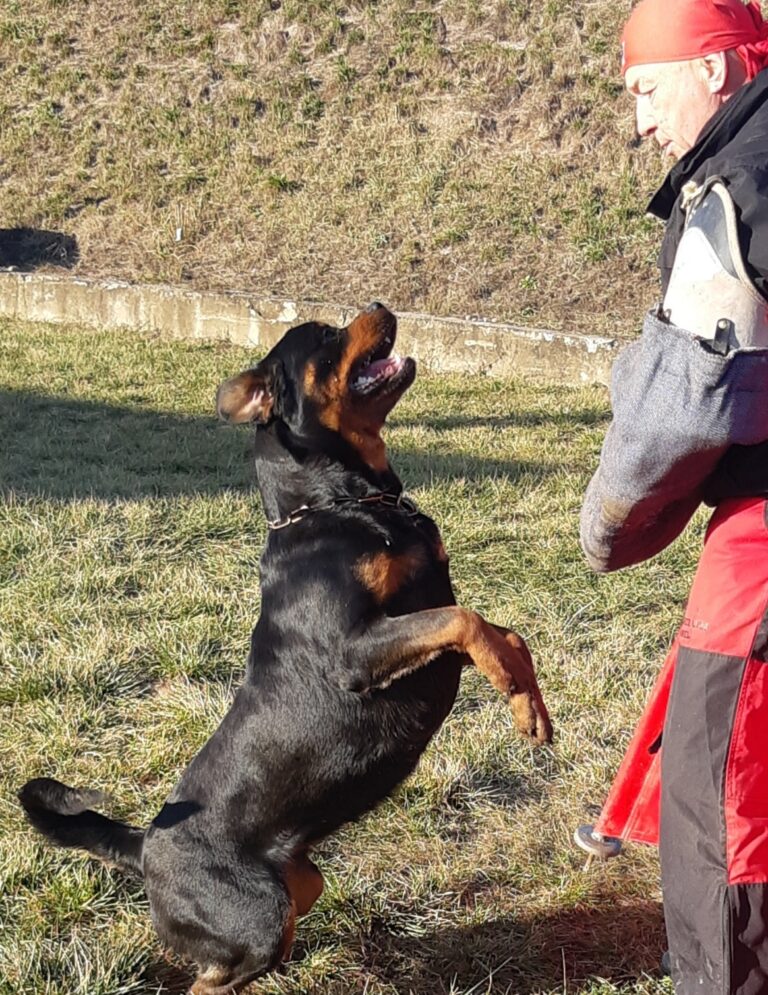
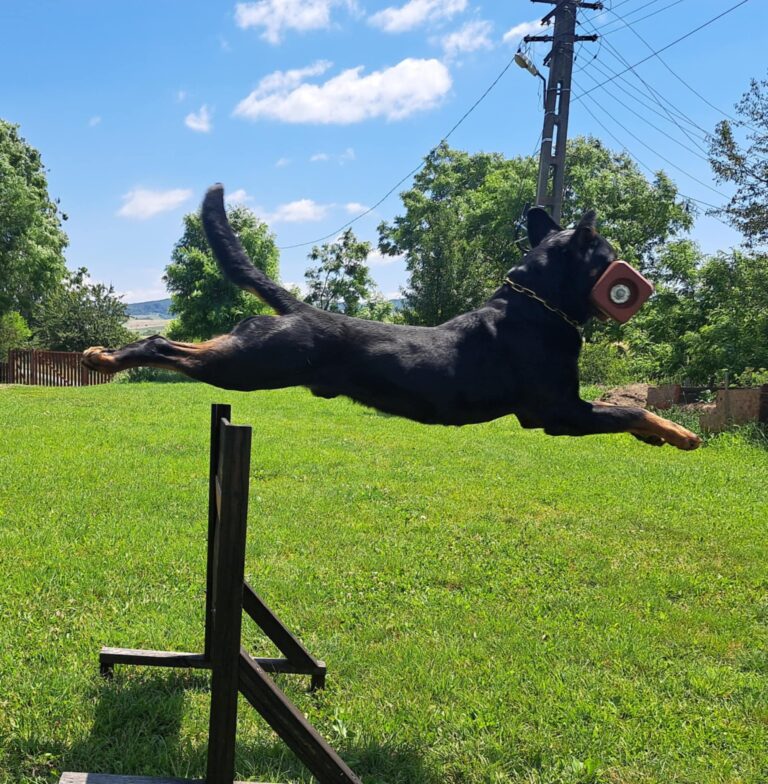
Good protection training builds obedience alongside defensive and civil work. The dog learns how to respond to command, how to remain neutral until needed, and how to apply pressure without losing control. This is especially important for owners who need a dog they can actually live with every day.
A properly trained dog should be able to move from household life to working mode without confusion. That transition is one of the strongest indicators of a balanced temperament. The dog understands context. It is not just aroused all the time.
Why obedience is part of temperament evaluation
Many people think obedience and temperament are separate. In practice, they are closely connected. A dog with solid nerves and willingness to work usually handles pressure in training more effectively. It can take correction, stay engaged, and recover quickly.
A dog that falls apart under structure, becomes frantic, or resists direction may have deeper temperament issues. That does not always mean the dog is bad. It may still be suitable as a companion. It does mean the dog may not be right for serious protection work.
What a buyer should watch for
When evaluating rottweiler protection dog temperament, look at the dog in ordinary situations, not just in staged protection scenarios. A dog can perform on a training field and still be unstable in daily life.
Watch how the dog enters new environments. Does it move with confidence or hesitation? Observe how it handles strangers when no threat exists. Does it remain composed, or does it become suspicious too quickly? Pay attention to recovery after stimulation. A stable dog can activate and then settle again.
It also helps to see the dog around surfaces, noise, vehicles, and distractions. Environmental confidence is not a minor detail. A protection dog that struggles in unfamiliar settings is less dependable when you actually need it.
Handler responsiveness is another major piece. A serious dog should still be manageable. If the handler is constantly negotiating with the dog or physically overpowering it, that is a warning sign. Real control should be visible.
Not every Rottweiler is suited for protection work
This is where honesty matters. The breed has the potential for excellent protection work, but not every individual dog should be developed for that role. Some are better suited as companions. Some have enough confidence for sport but not enough clarity for real-life civil pressure. Some may have strong drives but lack the balance needed for family placement.
That is not a failure. It is responsible evaluation.
Trying to turn the wrong dog into a protection dog usually creates problems for the owner and the dog. The better path is selecting the right prospect from the beginning, then developing that dog carefully. Working Rottweilers built on stable breeding and IGP-grounded standards are far more likely to deliver the combination buyers actually need – capability, control, and reliability.
The trade-off between power and manageability
Many buyers want maximum deterrence, and that is understandable. But the most intimidating dog is not always the best dog for your situation. A very hard, highly driven animal may require more handling skill, more maintenance training, and a more structured lifestyle than some households expect.
The right fit depends on your environment, your experience, and your goals. A family with children may need a dog with strong protective instinct but exceptional neutrality in the home. A business owner with a larger property may prioritize territorial presence and higher defensive thresholds. In both cases, temperament must match use.
That is why serious providers assess the owner as carefully as the dog. Placement is not just about selling a trained animal. It is about building a workable partnership that holds up in real life.
Why stable temperament is the real standard
A protection dog should make you safer, not make daily life harder. Stable temperament is what allows a Rottweiler to be trustworthy in the home, decisive under threat, and controllable in public or private settings. Without that balance, strength becomes a problem instead of an advantage.
For buyers who want more than a visual deterrent, temperament is the standard that matters most. It is the difference between a dog that performs when everything is easy and a dog that remains reliable when something is not.
If you are considering a trained Rottweiler for personal, family, or property protection, keep your focus where it belongs. Look past appearance. Look past noise. The right dog should show calm confidence, disciplined obedience, and the kind of steady character you can trust when it counts most.
3 Comments